Diodes
Fast-recovery diodes are often underestimated in power semiconductor development programs. While they may appear simpler than actively controlled devices such as IGBTs or MOSFETs, achieving the optimal balance between conduction losses, reverse recovery behavior, ruggedness, and reliability can be highly challenging.
A well-designed diode contributes significantly to overall system performance by reducing switching losses, limiting overvoltage stress, minimizing oscillations, and improving electromagnetic compatibility.
We bring extensive experience in the development and optimization of fast-recovery diodes across a wide range of voltage classes and applications. Our goal is to develop diodes that deliver excellent performance and robustness while operating reliably in the background without creating challenges for the application engineers.
Technologies and Areas of Specialization
Diodes with Local Lifetime Control
- Optimization of local irradiation profiles and lifetime control concepts
- Minimization of leakage currents associated with localized lifetime controll
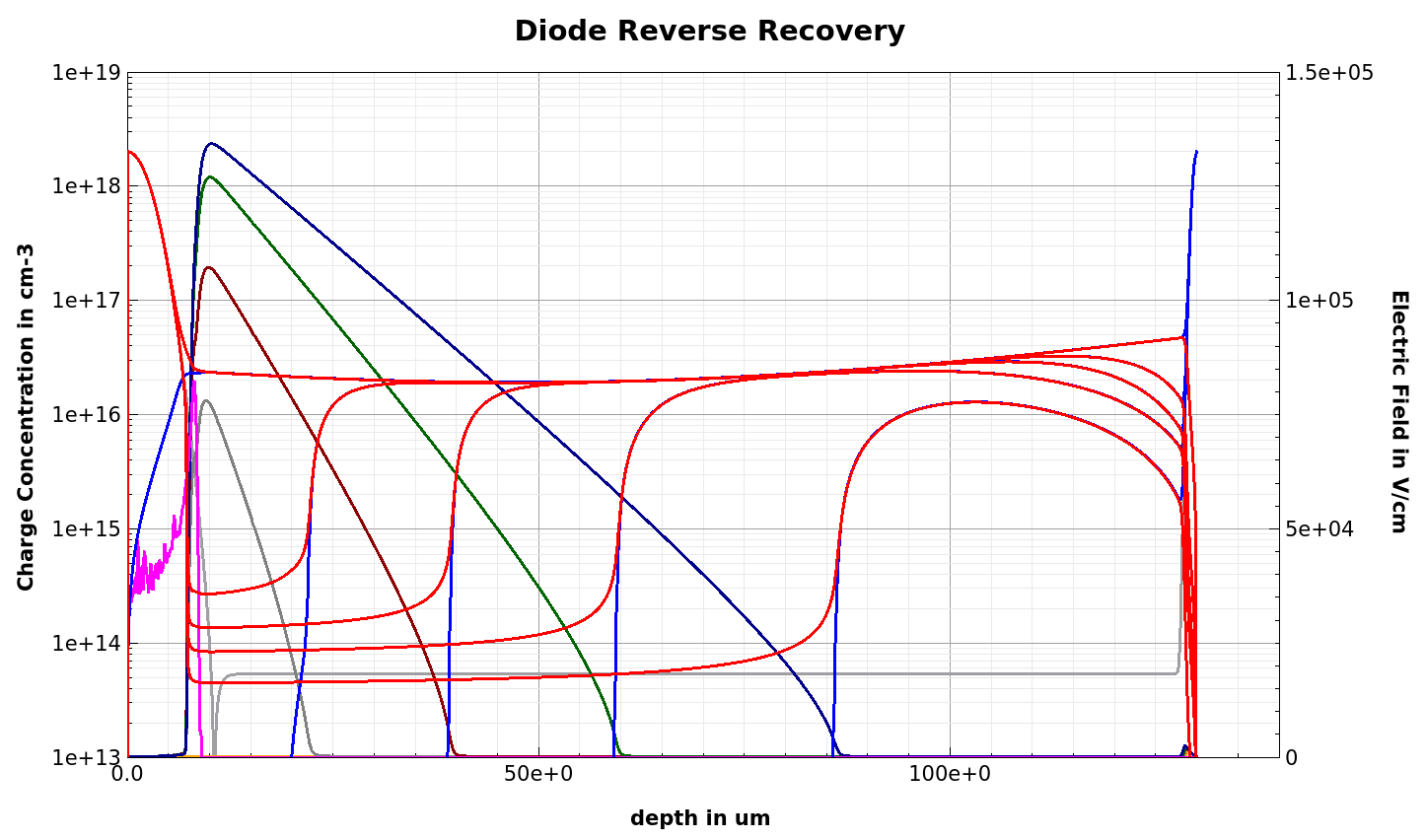
- Optimization of reverse recovery behavior and softness
Diodes with Emitter-Efficiency-Controlled Anodes
- Optimization of the anode profile to reach the targeted reverse recovery behavior
- Anode optimization for surge-current capability
- Integration of active area and termination design to achieve high reverse-recovery ruggedness
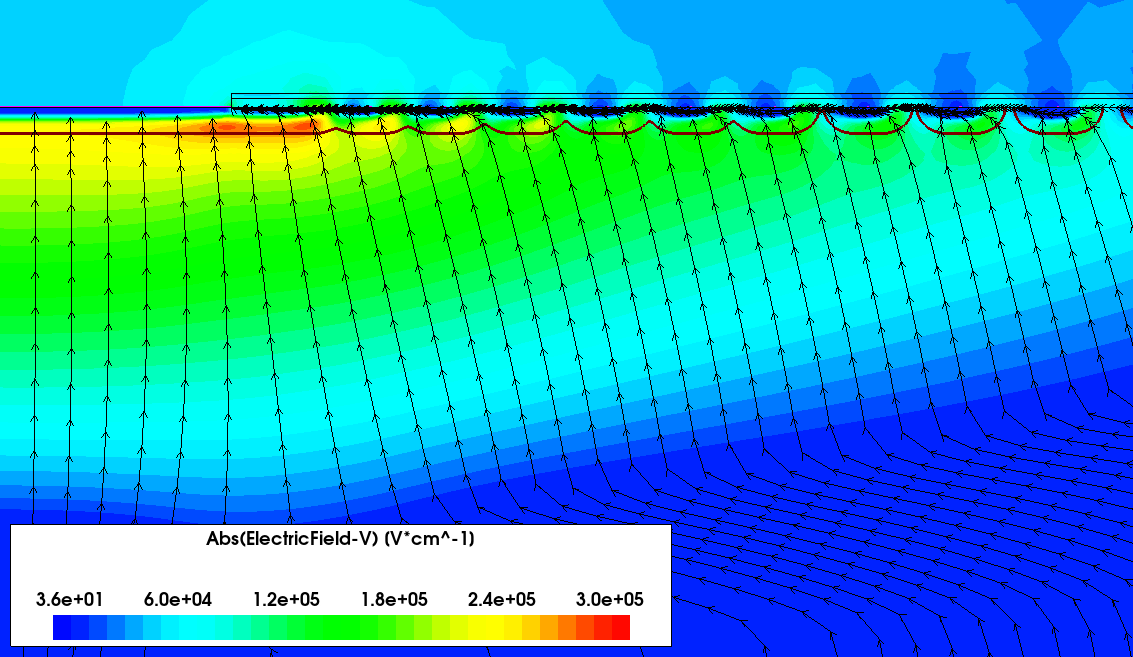
The figure below illustrates a typical example of the active-area-to-termination transition in weak-anode diodes, which must be carefully engineered to achieve a high reverse-recovery SOA and robust application performance.
Services
- Development of next-generation diode technologies
- Performance improvement and optimization of existing diode platforms
- Silicon and buffer design for low losses and soft reverse-recovery behavior
- Optimization of reverse-recovery ruggedness and SOA performance
- Co-optimization of IGBT–diode interaction to minimize total system losses
- Cost-reduction projects through process simplification and mask count reduction
- Reliability improvement and qualification support
- Application-oriented optimization for demanding power electronic systems